
A museum is a place where memories are kept — where we return to trace the stories of those who came before us, stories that now exist only in our imagination.
There once were civilizations, dynasties, and eras that rose and faded somewhere in time. Yet we may never truly know what unfolded in those distant pasts — only fragments remain: relics, artifacts, photographs — clues from which we can only infer and imagine.
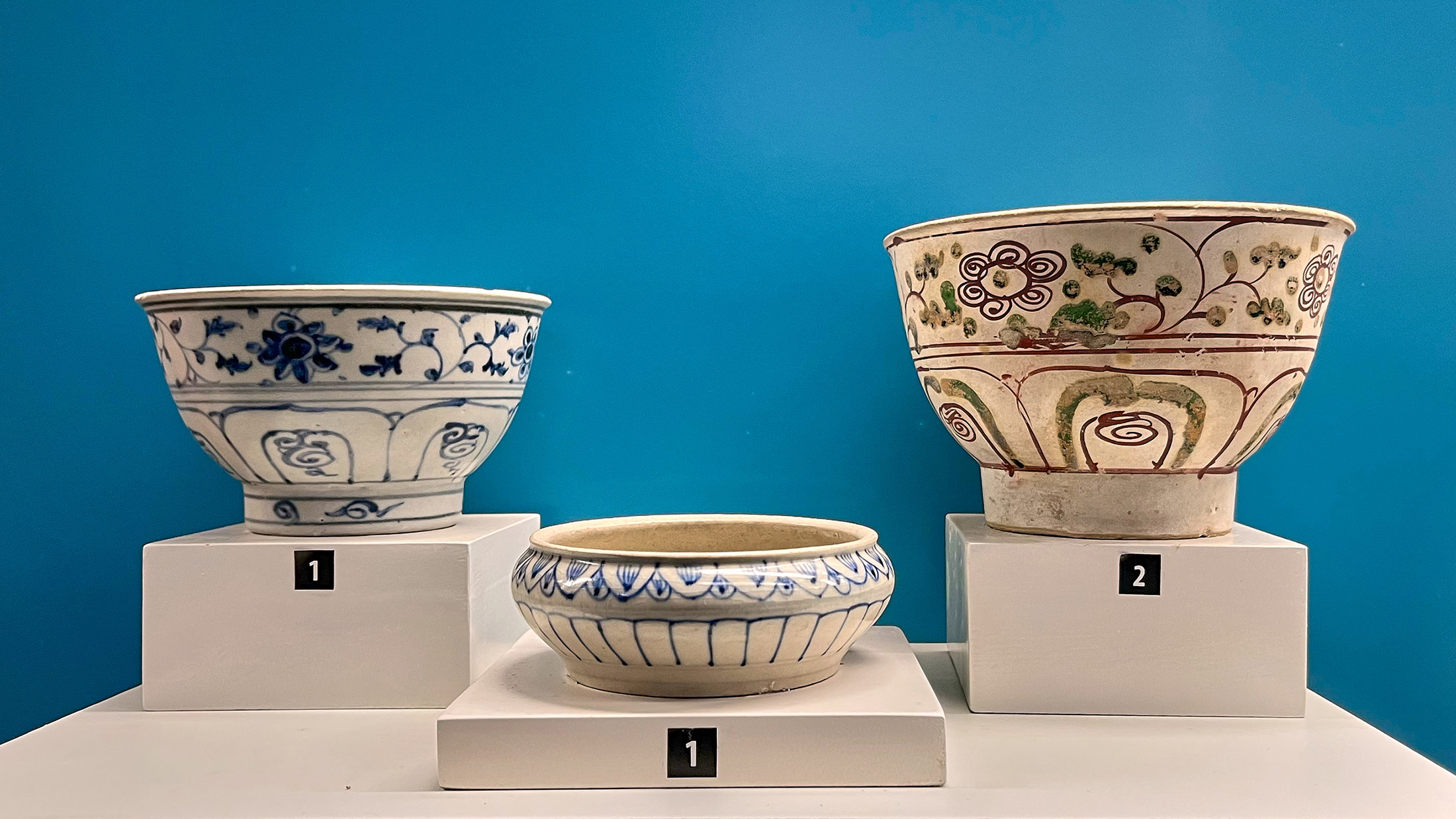
A few days ago, I had the chance to visit the HCMC History Museum and the Museum of Traditional Vietnamese Medicine. Standing before those ancient objects, I felt a quiet surge of inspiration. Despite the modest tools of their time, the craftsmanship was astonishingly refined — from the intricate motifs on Dong Son bronze drums, to the delicate brushwork of Chu Dau ceramics, or the detailed sketches of Traditional Vietnamese herbs. Across every era and discipline, the artistry and aesthetic sensitivity of our ancestors have always shone through.
Since the beginning of my own creative journey, I’ve often wondered: Does there truly exist an artistic identity we can call “Vietnamese”?
Perhaps that question is slowly answering itself — and I believe that, with patience, we will see how deeply unique and distinct the Vietnamese artistic spirit really is.
If you ever find yourself in a foreign land, take a moment to step inside a museum — any museum. It’s there that the vast memory of a nation, a people, or even humanity itself is preserved. And in that quiet space, we come a little closer to understanding where we come from — and who we are.
I’ve always felt a quiet thrill standing before ancient relics. That’s when imagination awakens, weaving stories out of silence — from the colossal bones of long-extinct creatures to the remnants of civilizations now reduced to dust and sand. Each of them stands as a witness to something once magnificent.
And after every imagined story comes the inevitable questions: Why? How? How many lives have we lived before this one?
Perhaps that is the mystery of time itself — we will never know what’s to come, nor can we ever be certain of what has passed. Only the present moment offers us the fragments from which we build our understanding of both the past and the future.


